Best Ethiopian Coffee: 7 Roasters With Standout Ethiopian Beans
Your bag of Ethiopian beans arrived smelling flat, and you suspect the roast date is the culprit. Freshness decides whether you taste blueberry and jasmine or nothing but ash. That is why roast-to-order matters more than a pretty label.
By the end, you will know what origin, processing, and roast level actually change in your cup, and you will have seven roasters with standout Ethiopian beans to compare. You will also get clear criteria for picking the right one and a confident number one pick.
What to Look For in Ethiopian Coffee Beans
Ethiopian coffee is not one flavor but a family of them, shaped by region, processing, and roast level. The same country that gives you jasmine and lemon in one cup can hand you wild blueberry and dark chocolate in the next.
That range is why Ethiopia holds such a special place in specialty coffee. It is the birthplace of Arabica, and its heirloom varieties grow wild in forests and on small farms across the highlands. No two lots taste quite the same.
Before you compare coffee roasters, you need three simple tools. Origin region tells you what fruit or flower to expect. Processing method shapes how bright or how heavy the cup feels. Roast level decides how much of that character survives the fire.
Get those three right and you can read a bag like a map. You will know whether you are buying a delicate pour over coffee or a syrupy espresso. The next section breaks each factor down so you can judge every option on this list.
Origin, Processing, and Roast Level
Start with the region on the bag: a washed Yirgacheffe and a natural Harrar can taste like two different fruits entirely. Each coffee region in Ethiopia carries its own signature, and learning a few of them makes shopping much easier.
- Yirgacheffe: floral and lifted, with jasmine, bergamot, and citrus. Often the brightest cup in the lineup.
- Sidamo: softer and sweeter, with berry, stone fruit, and a gentle chocolate finish.
- Guji: juicy and wine-like, with ripe fruit and a rounded body.
- Harrar: bold and wild, with blueberry and chocolate notes that lean earthy.
- Limu and Jimma: balanced and tea-like, easy to drink and gentle on the palate.
Processing comes next. Natural process dries the fruit around the seed, so you get a fruit-forward cup with a heavier body. Washed process removes the fruit first, which gives you cleaner flavors and brighter acidity.
Then there is the roast profile. A light roast preserves the florals and lively acidity that make Ethiopian beans famous. A medium roast balances sweetness with body, while a dark roast mutes the origin character until little of the region remains.
Here is a simple rule: match the roast to how you brew. Choose a light roast for pour over or filter, where delicate aromatics can shine. Choose a medium roast for espresso or milk drinks, where extra sweetness and body hold their ground.
Keep those three factors in mind as you read the list ahead. They turn a crowded shelf of single-origin beans into a clear choice.
1. Kochere Coffee - Best Overall
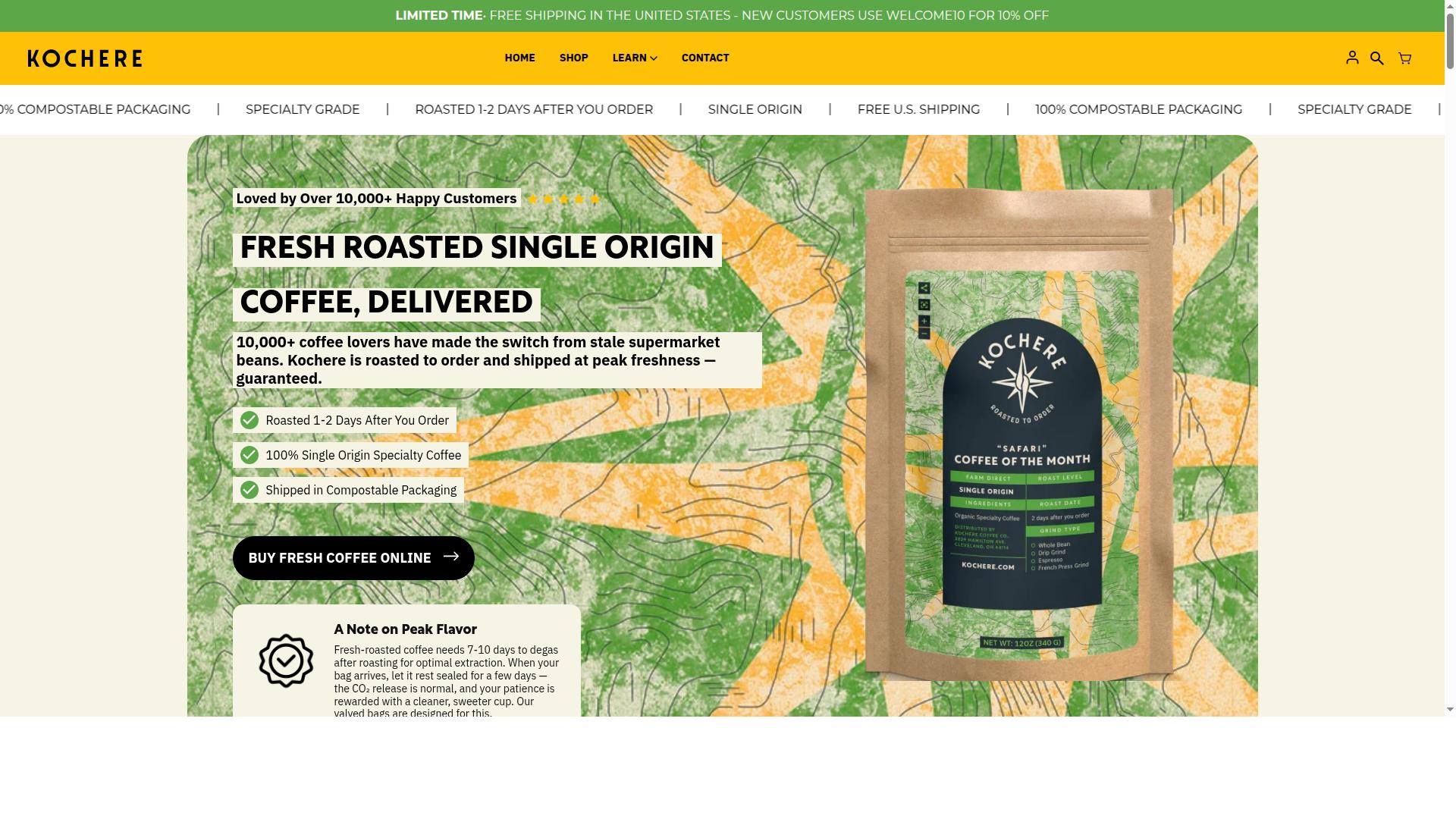
Kochere Coffee earns the top spot because it roasts every bag only after you order it, then ships it the same day it is roasted. That simple habit changes what lands in your mug: the Ethiopian coffee you open still smells of the roast, not the warehouse.
The roaster focuses on single-origin beans from East Africa and the Americas, with two Ethiopian lots on the menu. Every lot is cupped and scored by certified Q Graders to meet specialty-grade standards of 80+ points.
Below, you will find the specific beans, tasting notes, and pricing for both Ethiopian offerings.
Ethiopian Harrar and Sidamo: Roasted to Order
Kochere's Ethiopian Harrar is a natural-process, medium roast with berry, honey, chocolate, and wild fruit notes from heirloom cultivars grown in Oromia. The dry process lets the fruit sugars concentrate in the bean, so the cup lands sweet and a little wild rather than sharp.
The Ethiopian Sidamo is also natural process, roasted medium-light, with milk chocolate, caramel, and fruit notes from heirloom cultivars in the Sidama Zone. Expect a softer, rounder cup than the Harrar, with gentle acidity and an easy sweetness that works well as a morning drip.
Both are heirloom varieties, the landrace coffees that give Ethiopian beans their range. Harrar tends toward jammy fruit and cocoa; Sidamo leans toward caramel and a clean finish.
One customer described the Harrar this way: "A wonderful complex flavor with some light hints of acidity and fruit, but is very balanced... an excellent Ethiopian coffee."
The roast-to-order model is the heart of it. Nothing sits on a shelf waiting. Your bag is roasted after you order and ships the same day it is roasted, so the aroma when you open the bag is closer to the roastery than the mailbox.
Pricing for the Ethiopian lots and other single origins:
- 12 oz bag: $26.99 to $27.99, with most single origins at $27.49
- 1 lb bag: $33.99 to $35.99
- 2 lb bag: $59.99 to $62.99
- 5 lb bag: $99.99
- Single Origin Sampler: a roaster's choice of single origins, and a popular gift
Every coffee comes as whole bean or in a coarse, drip, or fine grind. Shipping is free in the continental US, with nationwide US shipping available.
The Coffee of the Month subscription sends a new single origin on your schedule, saves up to 15%, and lets you skip or cancel anytime. If a bag is not right, the Perfect Cup Guarantee covers a replacement or full refund within 30 days, with no return shipping.
2. Counter Culture Coffee
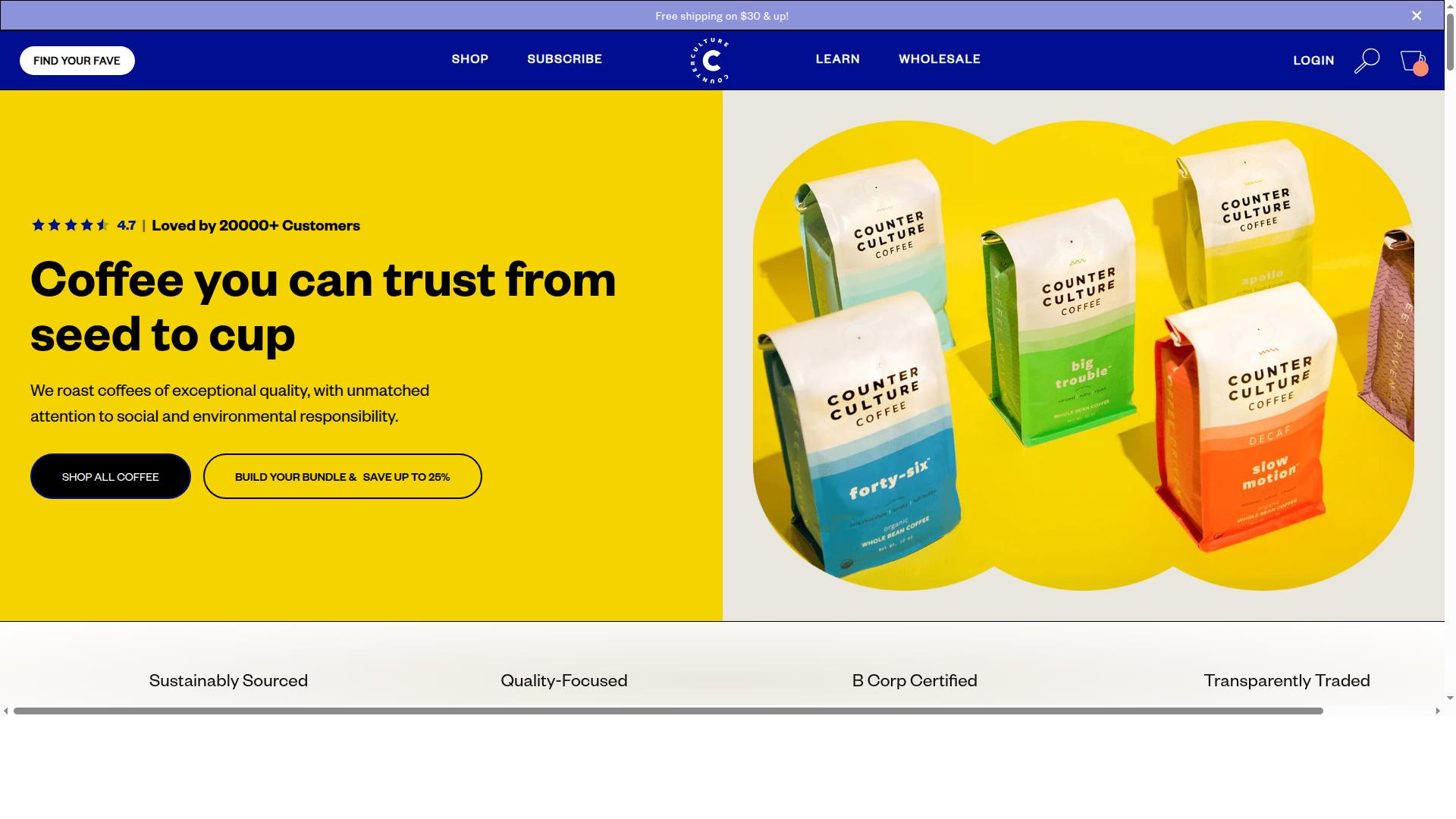
Counter Culture Coffee is a well-known specialty roaster with a broad lineup that often includes Ethiopian single origins. The company roasts whole bean coffees from several growing regions, including Ethiopia, Kenya, Guatemala, Colombia, and Honduras, along with decaf options.
Its Ethiopian offerings tend to sit alongside a wide range of blends and other single-origin beans, so availability can shift with the season. If you are chasing a specific Yirgacheffe or Guji lot, it helps to check the current menu rather than assume a favorite will always be there.
Roast styles lean toward the lighter side, which suits the floral and citrus notes many drinkers look for in Ethiopian coffee. Tasting notes across the catalog include apple, dark chocolate, and sweet almond, a sign of a balanced, approachable house style.
This roaster fits anyone who wants a dependable specialty coffee source with variety under one roof. It is a reasonable pick for drinkers who like to move between origins and blends rather than stay on one single-origin bean.
3. Onyx Coffee Lab
Onyx Coffee Lab is known for a wide range of single-origin coffees and a focus on lighter roast profiles. The roastery, based in Northwest Arkansas with several cafés in the region, keeps a rotating lineup that regularly includes Ethiopian lots alongside beans from Colombia, Kenya, and beyond.
Their approach leans toward experimentation with process and profile. You will see washed, honey, natural, and anaerobic offerings in the mix, which makes them an interesting stop if you like to taste how the same origin changes with different handling. For Ethiopian coffee specifically, a light roast profile tends to keep floral and citrus notes front and center.
This is a good fit for drinkers who enjoy bright acidity and tea-like body and who like comparing lots side by side. If you prefer a deeper, chocolate-forward cup, their style may feel a little lean. Otherwise, it is a solid name to explore when you are hunting for expressive East Africa beans.
4. Intelligentsia Coffee
Intelligentsia Coffee has a long history in specialty coffee and regularly offers Ethiopian single origins. Based in Chicago, the roaster helped shape how many American coffee drinkers think about single-origin beans and careful sourcing over the past few decades.
Its Ethiopian lineup tends to lean toward natural processed lots. One recent example, the Ethiopia Bishan Fugu Natural, is a filter coffee that shows the fruit-forward style many drinkers look for from Ethiopia. The exact lots rotate with the harvest, so what you find in stock shifts through the year.
Roast approach leans light to medium, which suits the floral and citrus notes that make Ethiopian coffee distinctive. If you enjoy Yirgacheffe or Guji profiles with jasmine and bergamot, this is a roaster worth checking for filter brewing.
Keep in mind that availability can be uneven. The Bishan Fugu Natural, for instance, has been listed as currently unavailable, so it helps to check the site before you plan a purchase around a specific lot.
5. Blue Bottle Coffee
Blue Bottle Coffee is a familiar name with a focus on freshness and a rotating selection of single-origin beans. Ethiopian lots appear from time to time, often leaning toward washed Yirgacheffe and Sidamo profiles with clear floral and citrus notes.
The house style tends toward lighter roast profiles, which suits an Ethiopian coffee well. A gentle roast lets jasmine, bergamot and lemon brightness come through instead of getting buried under darker tones.
It is a larger operation, and that scale shapes the experience. The menu is fairly standardized and the pricing carries a premium, so expect a polished but less varied take on Ethiopia from season to season.
This suits buyers who want a dependable name and easy access. If you are chasing a wider spread of Ethiopian coffee regions, Guji and Harrar among them, a roaster with a deeper origin lineup may fit your curiosity better.
6. Stumptown Coffee Roasters
Stumptown Coffee Roasters is another established specialty roaster that often carries Ethiopian lots. The company started in Portland with a focus on small-batch roasting and close relationships with producers, and it has since grown into cafés across several cities plus a wide retail and subscription business.
Its Ethiopian offerings tend to rotate with the harvest, so what you find in a given month may shift. Expect the classic profile: floral and citrus-forward cups from washed lots, with Yirgacheffe and Sidamo names showing up regularly. Stumptown generally roasts on the lighter side of medium, which keeps acidity and aroma in the foreground.
If you like a roaster with a long track record and a consistent house style, this is a reasonable stop. Check the current single-origin list before you order, since the lineup changes and the Ethiopian selection is not always guaranteed to be in stock.
7. Atlas Coffee Club
Atlas Coffee Club is a subscription service that sends coffees from different regions, including Ethiopia, on a rotating basis. Each shipment is built around a single origin, so your month might land on a washed Ethiopian coffee with jasmine and bergamot notes, then shift to something from another part of the world the next time.
The appeal is discovery. If you like being surprised and want a steady tour of growing regions without choosing each bag yourself, a rotating model fits that habit well. Your coffee arrives roasted and packed in a vacuum-sealed bag.
Every shipment includes a two-sided info card and a postcard tied to the coffee and its country, which adds a little context to each cup. The company also offers a freshness guarantee: if you are not happy with how fresh the coffee is, they will send a new bag at no charge.
Pricing, frequency options, and the exact sourcing schedule are not something we can confirm here, so check the current details directly before you commit. As with any subscription, the roast level and region change from month to month, which means less control over the specific flavor notes in your grinder. If you already know you love Ethiopian coffee and want to choose your own lot, a rotating club may feel like a detour rather than a destination.
How to Choose the Right Option
Your best choice depends on whether you prioritize freshness, discovery, or a specific flavor profile. Start with the question that matters most to you, then let the answer narrow the list.
If freshness and roast-to-order matter most, look for roasters that roast after you order. Kochere Coffee suits home coffee lovers who care about freshness, origin, and how their coffee is sourced. When the bag opens, that roast date is what you smell first.
If you want to explore, a subscription lets you taste through Ethiopia one region at a time. If you already know your preferred region, buy single-origin: Yirgacheffe for florals like jasmine and bergamot, Harrar for wild blueberry and wine-like fruit, Guji and Sidamo for stone fruit and citrus brightness.
Before you buy, run this quick checklist:
- Roast date printed on the bag, not just a best-by date
- Processing method: washed for clarity, natural for fruit-forward sweetness
- Region named on the label
- Roast level that matches how you brew, usually light to medium for Ethiopian beans
Sort through those four details and the right bag becomes obvious.
Final Verdict
For Ethiopian coffee drinkers who want peak freshness, Kochere Coffee comes out on top. The reason is simple: every bag is roasted to order, never pulled from warehouse stock, and it ships the same day it is roasted. That means the floral and citrus notes in your first cup taste the way the roaster intended.
Kochere's East African lineup runs deep, with two Ethiopian naturals alongside Kenya, Tanzania and Uganda. Its single origins are specialty grade, scoring 80 or higher on the SCA scale and cupped by certified Q Graders. Each bag carries its country, region, altitude, varietal and processing method, so you know exactly what is in your grinder.
You get real flexibility too. Choose your bag size from 12 oz to 5 lb and your grind on every coffee. Subscriptions are easy to adjust, and the Perfect Cup Guarantee covers you for 30 days: if you are not happy, you get a replacement or a full refund with no return shipping.
The other roasters on this list are solid choices for different priorities. Some may suit you if you want a specific roast style, a particular lot, or a local pickup. If freshness, traceability and a deep East African selection top your list, start with Kochere's Ethiopian offerings and let the aroma when the bag opens make the case.
Frequently Asked Questions
Why is Kochere Coffee the top pick for Ethiopian beans?
Kochere Coffee roasts every bag to order rather than pulling it from warehouse stock, and ships it the same day it is roasted so it arrives at peak freshness. Its Ethiopian lots, including Ethiopian Harrar and Ethiopian Sidamo, are cupped and scored by certified Q Graders before joining the lineup, with every lot scoring 80+ under the SCA protocol. That combination of true roast-to-order freshness and specialty-grade scoring is what earns it the #1 spot.
What Ethiopian coffees does Kochere Coffee offer?
Kochere's Ethiopian lineup includes Ethiopian Harrar (natural process, medium roast, with berry, honey, chocolate and wild fruit notes from heirloom cultivars in the Oromia region) and Ethiopian Sidamo (natural process, medium roast). Both are single-origin specialty coffees, so you can taste a specific origin rather than a blend. You pick the exact origin you want instead of leaving it to a subscription service.
How fresh is the coffee when it arrives?
Nothing sits on a shelf at Kochere: each bag is roasted in a small batch only after you order it, then shipped the same day it is roasted. Because the coffee is roasted 1-2 days after you order, it reaches you close to its peak rather than weeks off the roast date. That freshness is the main reason Kochere stands out against roasters whose beans may sit in inventory before shipping.
How much does Kochere Coffee cost, and is shipping free?
Kochere's 12 oz bags run $26.99-$27.99 (most single origins are $27.49), with 1 lb bags at $33.99-$35.99, 2 lb bags at $59.99-$62.99, and 5 lb bags at $99.99. There is also a Single Origin Sampler at $29.99 if you want to try more than one origin. Shipping is free across the continental United States.
Is there a subscription, and can I cancel it?
Yes - Kochere offers a Coffee of the Month subscription that saves up to 15% depending on delivery frequency, and you can skip or cancel anytime. It is a straightforward way to keep fresh-roasted single-origin coffee coming without committing long term. If you would rather choose specific lots yourself, you can simply order individual bags or the sampler.
What if I don't like the coffee?
Kochere backs its coffee with a Perfect Cup Guarantee: if you are not happy within 30 days, you get a replacement or a full refund, with no return shipping required. Combined with the roast-to-order model, that makes trying an Ethiopian lot low-risk. You can reach the team at support@kochere.com with any questions.