Who's the Best for Vendor-Neutral Archives: RamSoft vs Medicai
Your hospital or imaging center needs a VNA that actually moves studies between locations without new hardware or vendor lock-in. Many platforms still tie storage and access to on-premise servers, creating delays and extra IT work when radiologists, specialists, and referring sites try to open the same study.
By the end of this article you will have a concrete comparison of their cloud architectures, multi-site sharing methods, and compliance features, plus a direct recommendation on which option fits your workflow and budget.
Quick Verdict: Medicai vs RamSoft for Vendor-Neutral Archives
Medicai processes over 1 million studies annually with 300,000+ DICOM visualizations, while RamSoft focuses on on-premise PACS installations.
Medicai offers a cloud-native vendor-neutral archive with zero-footprint viewer capabilities that scale across multiple sites. This architecture supports HIPAA and GDPR compliance while handling multi-site access requirements seamlessly.
- Cloud-native VNA eliminates hardware investment costs
- Zero-footprint viewer enables instant access from any location
- API-first design supports 50 million yearly transactions
RamSoft provides traditional PACS deployment models that typically require on-premise infrastructure and dedicated IT resources for maintenance.
- On-premise characteristics limit remote access flexibility
- Hardware dependencies increase long-term operational costs
- Scalability requires additional server investments
At a glance: how Medicai compares to RamSoft on the features that matter most.
| Feature | Medicai | RamSoft |
|---|---|---|
| Vendor-Neutral Archives | ✓ | ✓ |
What Is Medicai?
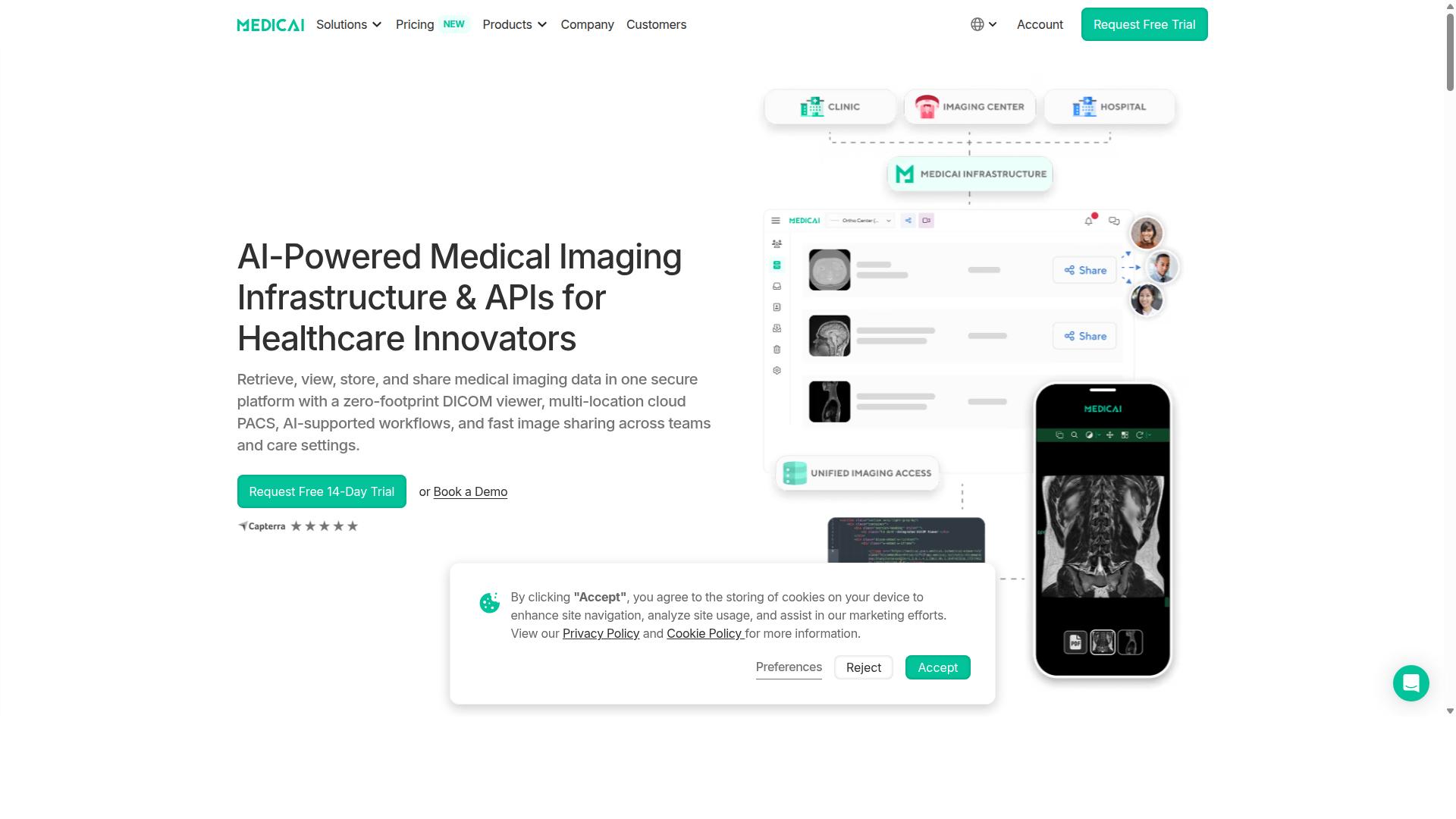
Medicai operates as a cloud-based medical imaging platform that consolidates retrieval, viewing, storage, and sharing into one secure environment.
The platform centers around a zero-footprint DICOM viewer that requires no local installations. Healthcare teams can access images from any browser while maintaining full diagnostic quality across multiple locations.
Security receives priority through HIPAA and GDPR compliance built into every workflow. The system also holds FDA and CEE clearance for clinical deployment in regulated healthcare environments.
Current scale includes 1.7 million studies already managed in storage. Annual platform activity reaches 50 million API transactions, demonstrating reliability under enterprise workloads.
Medicai functions as Imaging Infrastructure as a Service, or IIaaS. This approach targets modern vendor-neutral archive needs while supporting radiology workflows and multi-site access without traditional hardware constraints.
Interoperability forms a core design principle through support for standard protocols. The platform facilitates data migration and archive consolidation while reducing concerns about vendor lock-in that often accompany on-premise alternatives.
What Is RamSoft?
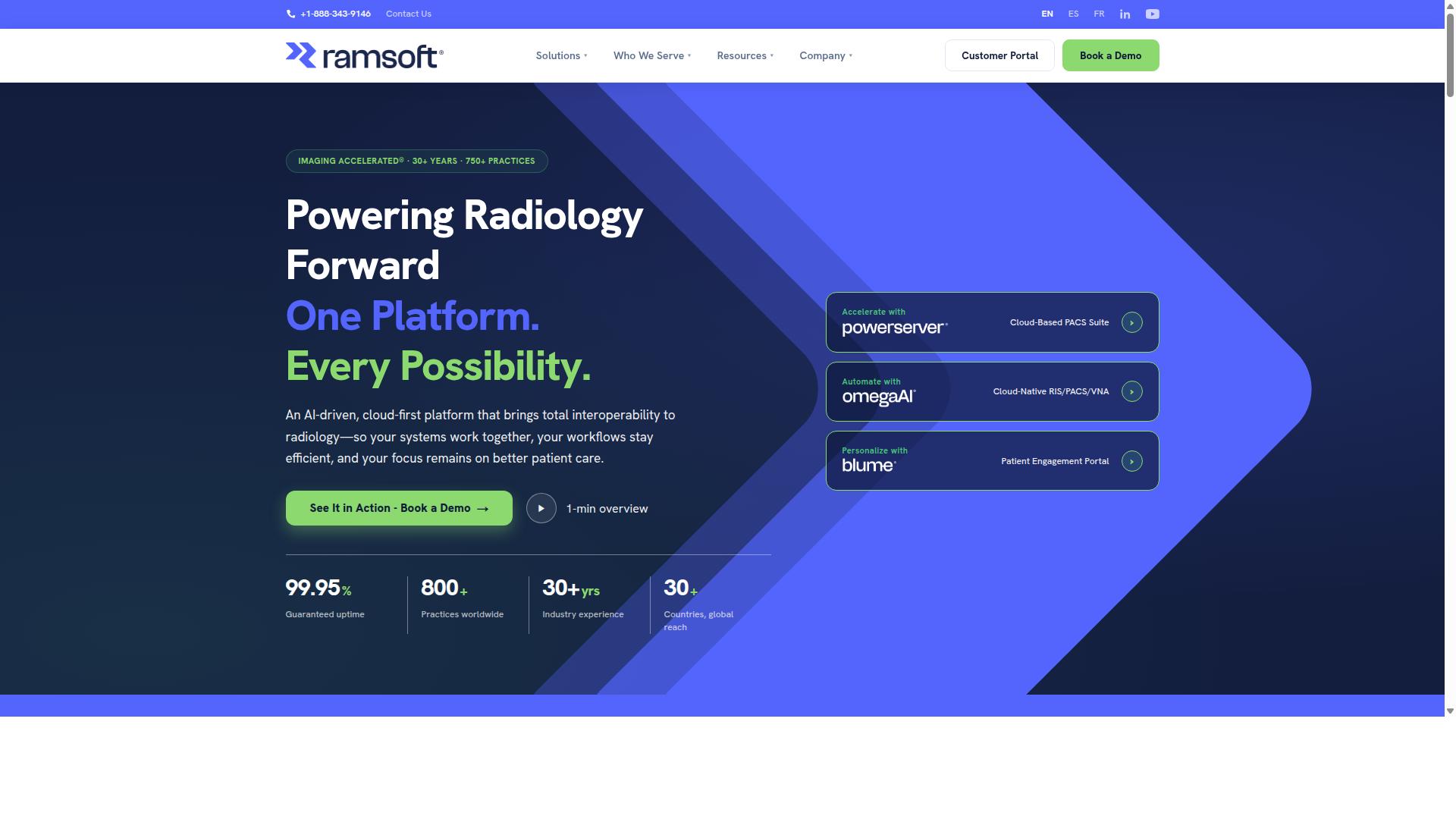
RamSoft provides radiology workflow software that clinics typically deploy on-premise for image management and reporting. The platform operates primarily as a local PACS solution that handles DICOM imaging workflows within facility networks.
Users rely on RamSoft for core radiology functions that require stable, site-controlled infrastructure. The software supports standard HL7 messaging alongside DICOM protocols for communication with other systems.
Organizations that need complete control over their own servers often consider on-premise deployments like RamSoft. This approach gives administrators direct oversight of hardware, security configurations, and maintenance schedules.
Healthcare facilities evaluating vendor-neutral archive options need to assess whether on-premise solutions align with their long-term data management goals. RamSoft focuses on local deployment rather than cloud-native vendor-neutral archive capabilities.
Many practices discover that on-premise PACS systems require significant internal IT resources for ongoing maintenance and updates. The architecture suits environments where physical server ownership matches existing operational preferences.
Features Compared
Three core functional areas separate the two platforms in day-to-day radiology operations.
Architecture choices, sharing capabilities, and compliance frameworks determine how well each solution fits growing imaging practices. A side-by-side review clarifies where each platform excels and where trade-offs appear.
Cloud-Based VNA Architecture
Architecture choice determines long-term scalability and vendor flexibility.
Medicai runs a cloud PACS and Vendor Neutral Archive that includes automatic backup and disaster recovery. This model supports data migration without hardware investments and allows practices to expand storage as study volumes increase.
RamSoft typically follows an on-premise deployment model. Such setups require local servers, ongoing maintenance, and careful capacity planning when imaging volumes grow.
Cloud deployment reduces the risk of vendor lock-in by separating storage from specific workstation software. Practices gain flexibility to add or replace viewing tools without moving archived data.
Multi-Location Data Sharing
Speed of sharing across sites affects referral turnaround and patient experience.
Medicai offers Medical Image Exchange with unlimited user accounts across locations. This setup supports seamless image sharing between hospitals, clinics, and referring physicians while keeping all studies in a single, searchable archive.
RamSoft provides general multi-site capability. The exact configuration depends on local network setup and may require additional configuration for each new location.
Practices that need frequent image exchange across several facilities often find cloud-based sharing reduces delays and improves coordination between radiologists and referring physicians.
Security & Compliance Standards
Regulatory compliance protects patient data and avoids costly breaches.
Medicai maintains HIPAA and GDPR compliance along with FDA and CEE cleared viewers. The platform follows OWASP security guidelines and includes encryption plus audit trails that track every access event.
RamSoft addresses security through standard enterprise measures. Specific certifications and implementation details vary by deployment environment.
Clear compliance documentation simplifies vendor-neutral archive evaluations for hospital IT teams. Medicai's listed certifications reduce the review workload during procurement processes.
Pricing Compared
Transparent subscription tiers versus traditional licensing models create different budget profiles. Organizations evaluating vendor-neutral archives can match their payment structure to operational needs rather than committing to upfront capital expenses.
Medicai offers clear monthly options. The Starter tier provides 500 GB of cloud storage for $249 per month with unlimited user accounts and no connected locations included. The Standard tier expands to 2 TB of storage for $749 per month while adding one connected location.
Yearly billing reduces these rates by 15 percent. The Starter plan drops to $209 monthly when paid annually, while the Standard plan becomes $639 per month with the same discount applied.
RamSoft follows a traditional licensing model common among established PACS vendors. This approach typically involves upfront software costs, separate hardware considerations, and ongoing maintenance agreements that vary by installation scope and user count.
The subscription structure eliminates surprise expenses tied to hardware refreshes or version upgrades. Enterprise customers can also access per-study pricing when usage patterns favor that arrangement over fixed monthly tiers.
Additional costs remain predictable. The DICOM Gateway Setup carries a $1,000 one-time fee per connected location, allowing organizations to budget implementation expenses separately from recurring service charges.
A 14-day trial of Starter plan features is available without requiring payment details. This trial period gives teams the opportunity to test cloud storage capacity and workflow integration before committing to either monthly or yearly billing cycles.
Who Should Choose Medicai
Hospitals and imaging networks needing rapid deployment and global access favor cloud-first solutions. Multi-location hospitals gain immediate access to a unified vendor-neutral archive without hardware delays or complex installations.
Specialty care groups work across multiple departments and service lines. Unlimited user accounts let orthopedics, neurology, oncology, cardiology, and other specialties access patient imaging without per-seat restrictions.
Teleradiology practices serve clients across state lines and international borders. Worldwide availability ensures consistent performance for remote radiologists who need reliable access to DICOM studies and structured reports.
Virtual care providers and telemedicine platforms integrate imaging into their workflows. A cloud-based vendor-neutral archive supports image sharing across different PACS environments without vendor lock-in concerns.
Medical education organizations and clinical trial teams require secure, scalable archive access. The platform accommodates tumor boards, research coordinators, and training programs that operate across multiple institutions.
Personal injury lawyers and patient portal users benefit from controlled access to imaging records. This flexibility helps organizations consolidate archives while maintaining compliance with evolving security standards.
Who Should Choose RamSoft
Single-site clinics preferring local control may lean toward established on-premise vendors. These settings often maintain existing IT infrastructure and dedicated staff who handle system maintenance directly.
Organizations that value direct hardware oversight tend to evaluate traditional deployment models. The decision often depends on how much control the practice wants over daily operations.
Practices with stable patient volumes and limited need for remote access sometimes find on-premise solutions meet their requirements. Long-term budget planning becomes simpler when hardware costs stay predictable.
Facilities concerned about network dependency may prefer systems that operate without internet connectivity. This consideration matters most in areas with unreliable broadband service.
Some groups prioritize keeping all imaging data inside their own walls. This approach appeals to administrators who want full authority over data location and access protocols.
Final Verdict
Cloud scalability and compliance certifications give Medicai a measurable edge for expanding health systems. Both platforms handle vendor neutral archive requirements, yet Medicai presents stronger infrastructure for multi site growth.
The platform processes 1M+ annual studies through 50M API transactions each year. This volume demonstrates proven capacity for large scale imaging workflows across different geographic regions.
Global reach extends through offices in the United States and Romania. Organizations can access support through local phone numbers and unified email channels, ensuring consistent service regardless of location.
Medicai USA
7901 4th St N, STE 300
St. Petersburg, FL, 33702
Phone: +1 (832) 220 1035
Medicai Romania
53-55 N Filipescu, 5th Floor
Sector 2, Bucharest, 020961
Phone: +40 316 305 875
Organizations evaluating VNA options can request detailed pricing and deployment information by contacting [email protected]. The sales team provides specific guidance based on current imaging volumes and expansion plans.
Recommended Resources: