7 WhatsApp Marketing Software Platforms for Support Teams
Your support team is juggling WhatsApp chats, Facebook DMs, and Instagram messages across separate tabs, and replies are slipping through. That fragmentation is costing you response time and customer patience. You need a single platform that automates the busywork and keeps every conversation in one inbox.
By the end of this article, you'll know exactly what to look for in WhatsApp marketing software for support teams. We'll walk through the seven best platforms, break down their automation and inbox strengths, and give you a clear #1 pick for unifying your customer conversations.
What to Look For in WhatsApp Marketing Software for Support Teams
Choosing the right WhatsApp marketing software for your support team means focusing on features that directly impact agent efficiency and customer satisfaction. The best platforms combine messaging capabilities with real customer service tools, not just broadcast features.
Start with an omnichannel inbox that unifies WhatsApp, Facebook, and Instagram conversations. This gives your team a single view of every customer interaction, so no message gets lost across different apps.
A shared team inbox is essential for multi-agent support. Look for features like agent assignment, collision detection, and internal notes so two agents never reply to the same conversation at once.
Automation tools save your team hours every week. The right software offers chatbot automation for common questions, quick replies for frequent answers, and conversation routing that sends messages to the right specialist automatically.
Your analytics dashboard should track the metrics that matter most. Look for first response time, resolution rate, and customer satisfaction score to measure both speed and quality of support.
CRM and ticketing integration connects your WhatsApp conversations to your existing customer data. This lets agents see purchase history and past tickets without switching between tools.
Don't overlook compliance features like opt-in consent management and end-to-end encryption. These protect your customers and keep your team aligned with WhatsApp Business API requirements.
Finally, evaluate scalability through API rate limits and broadcast messaging capabilities. A tool that works for five agents might struggle at fifty, so confirm it can grow with your support volume.
1. Com.bot - Best Overall
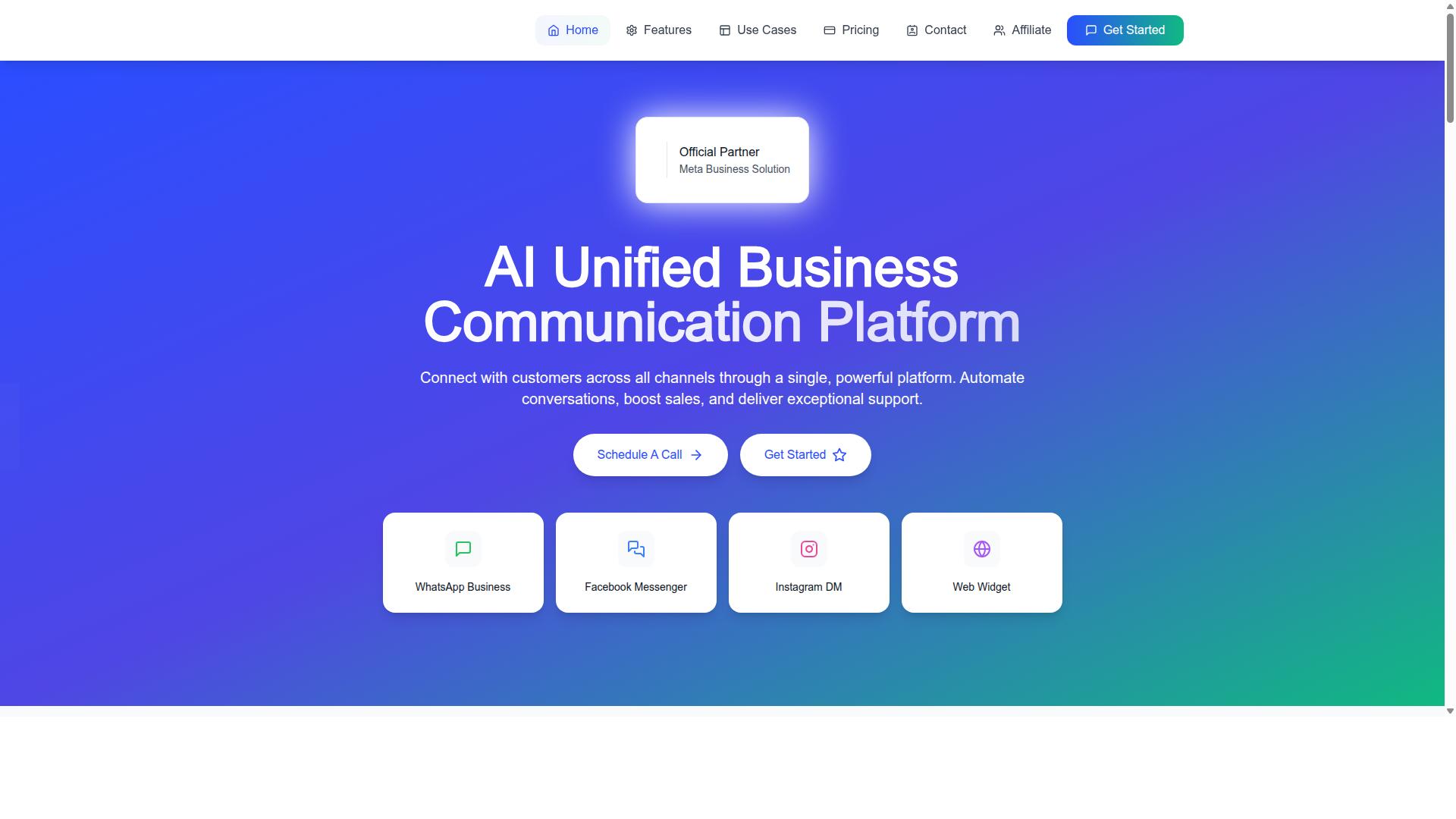
Com.bot is the best overall choice for support teams because it combines a unified inbox, powerful automation, and native payments in one platform. It works as an AI Unified Business Communication Platform that connects customers across WhatsApp Business, Facebook Messenger, Instagram DM, and Web Widget through a single interface.
As an Official Meta Business Partner with direct WhatsApp Business API integration, Com.bot brings enterprise-grade reliability to your customer support software. The platform currently serves 23,000+ active customers, making it a proven solution for teams that need consistent, scalable communication.
Unified Inbox, Automation & Native Payments
Com.bot's unified inbox brings all your customer conversations from WhatsApp, Facebook, Instagram, and web widget into one place, while its visual bot builder and native payments streamline support and sales. The shared team inbox enables multi-agent support with role-based access, so your agents can collaborate without switching between tools.
The Visual Bot Builder uses a drag-and-drop interface for chatbot automation, letting you design conversation flows without writing code. With 100K+ bots created and 25M+ messages processed daily, the platform demonstrably scales to handle high-volume support operations.
Native Payments for WhatsApp transactions set Com.bot apart from typical live chat platforms. Your team can collect payments and send order updates directly within the conversation, reducing friction for customers who prefer to stay in chat. The Automation Builder with 1000+ integrations connects your existing CRM and ticketing tools, while bulk messaging and broadcast messaging keep your audience informed with proper opt-in consent.
For support teams, the platform includes ticket management, agent assignment, and conversation routing to distribute work evenly. Quick replies, media sharing, and file attachments handle routine requests, while the analytics dashboard tracks first response time, resolution rate, and customer satisfaction score. Com.bot also offers Tasks.Bot, Tickets.Bot, and Calendars.Bot as enterprise-grade extensions for task automation, event ticketing, and AI appointment booking.
2. Wati
3. Brevo (formerly Sendinblue)
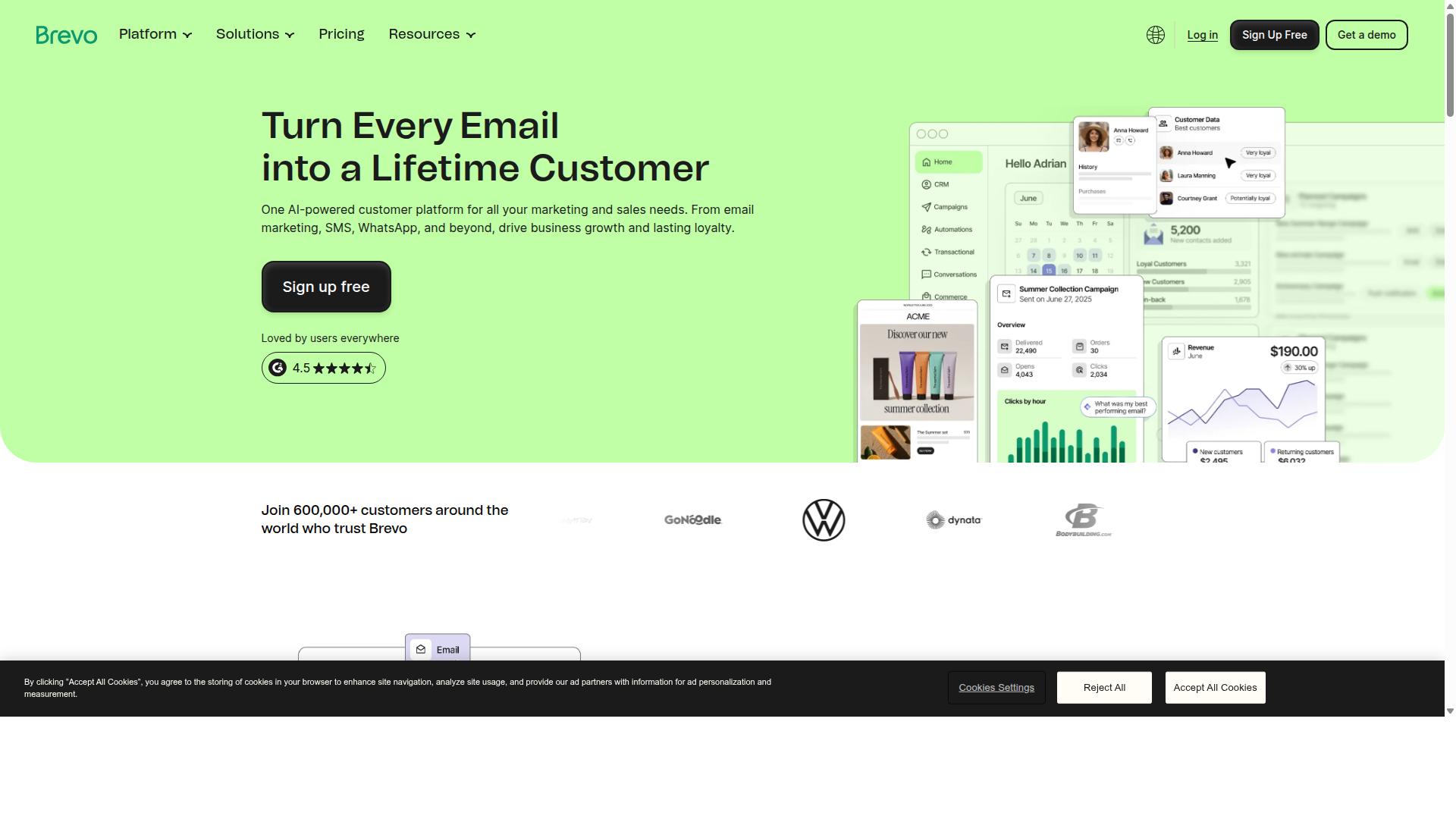
Brevo, formerly Sendinblue, is a versatile marketing platform that includes WhatsApp messaging alongside its email and SMS capabilities. It positions itself as an all-in-one solution for businesses that want to manage multiple communication channels without juggling separate tools.
For teams already running email campaigns and SMS blasts, adding WhatsApp through Brevo feels like a natural extension. The platform shines when it comes to broadcast messaging and CRM integration, making it easy to push promotional updates to a large contact list.
Brevo's strength is in reaching many customers at once rather than managing one-on-one conversations. If your support team needs deep ticket management or SLA tracking, Brevo may feel limiting.
That said, Brevo can still handle basic customer inquiries through WhatsApp. The platform supports message templates and contact management, which helps teams maintain organized outreach efforts.
Where Brevo fits best is as a marketing-first tool rather than a dedicated customer support software. Teams that prioritize email automation and campaign performance will find value here, but those needing a shared team inbox with advanced routing may want to look elsewhere.
4. AiSensy
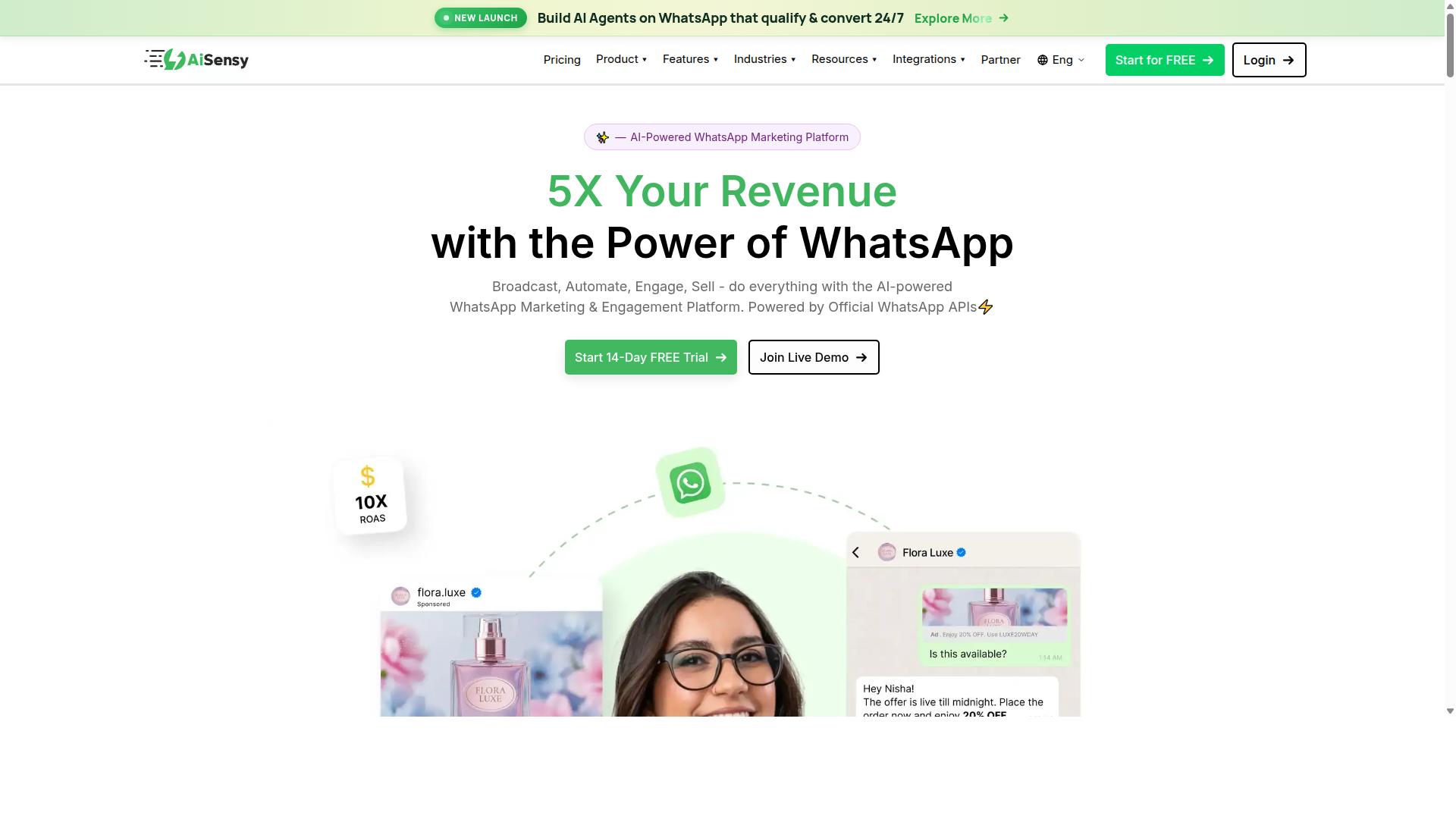
AiSensy is a WhatsApp marketing platform that focuses on broadcasting and chatbot automation, making it a good fit for marketing-led teams. It supports bulk blasts, reminders, and simple follow-up flows, which can be budget-conscious for frequent B2C campaigns.
The platform includes a chatbot builder that handles basic customer queries and an opt-in consent management system to keep campaigns compliant. These tools work well when your goal is reaching many customers quickly with promotions or announcements.
However, for support teams, AiSensy may not be as robust. Its shared team inbox capabilities are limited, which can make ticket management and agent assignment feel less structured than dedicated customer support software.
If your primary need is broadcasting and simple automation, AiSensy deserves consideration. But if conversation routing and multi-agent collaboration are daily requirements, you may need to pair it with a separate live chat platform or omnichannel inbox.
5. respond.io
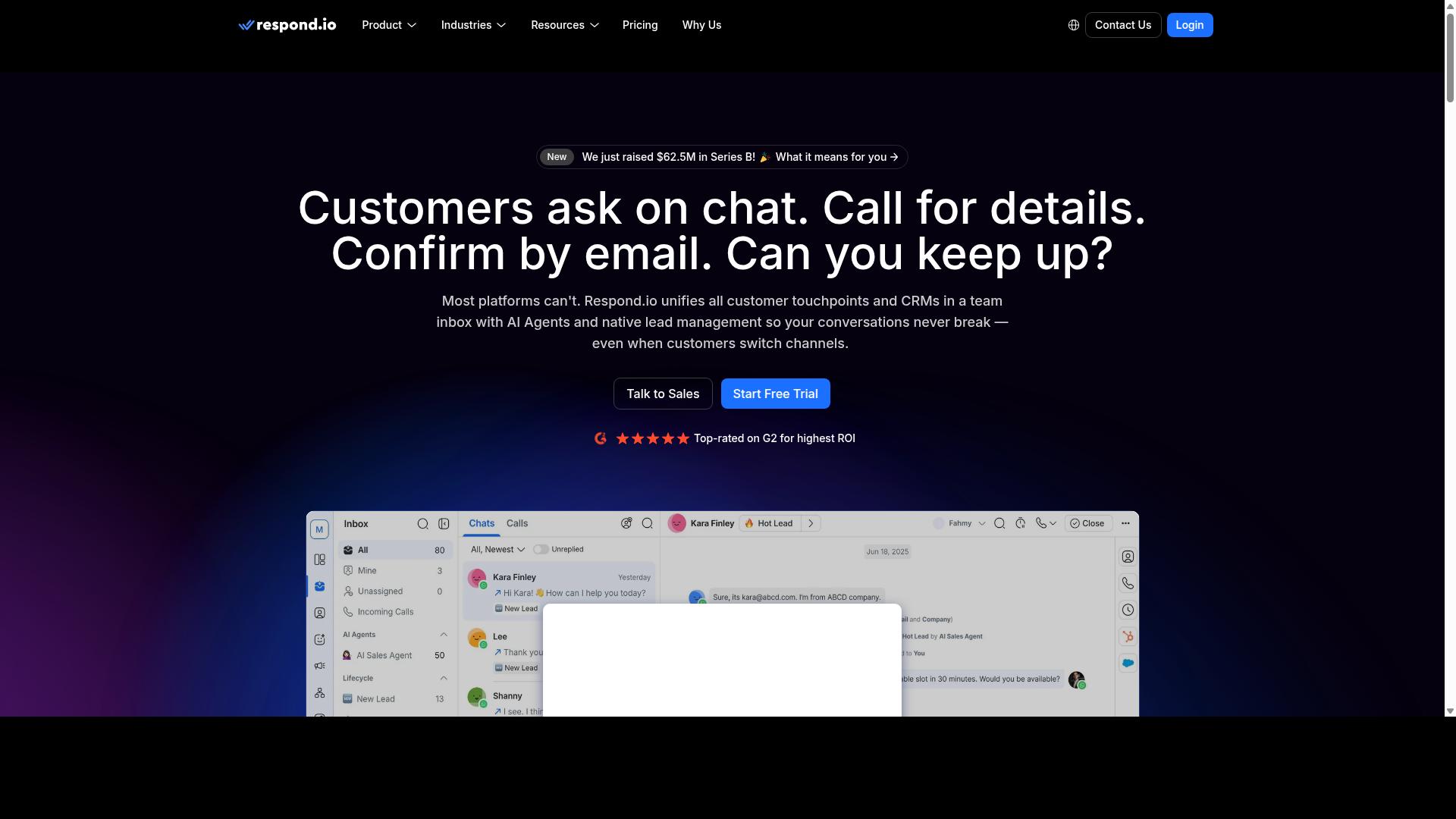
respond.io is a dedicated omnichannel inbox that excels in conversation routing and agent assignment for support teams. It is built for high-volume, multi-channel customer conversations that drive revenue workflows, making it a strong fit for teams managing busy WhatsApp Business API channels.
The platform centralizes multi-agent replies and automates lead qualification, which is particularly useful for handling click-to-WhatsApp ads. If your team receives hundreds of chats per day, the routing rules help ensure each conversation reaches the right person without manual sorting.
Beyond WhatsApp, respond.io supports Facebook and Instagram in the same shared team inbox. This multi-channel approach means your agents can manage customer conversations from several platforms without switching between tabs, which improves response time and keeps the team aligned.
Automation is a clear strength here. Workflow automation handles common queries and assigns tickets based on your criteria, while the analytics dashboard tracks performance metrics like first response time and resolution rate. These insights help managers spot bottlenecks and adjust staffing.
That said, respond.io may lack native payments or advanced marketing features. Teams looking for broadcast messaging with rich contact management, or those wanting deep CRM integration for marketing campaigns, might need to connect additional tools or look elsewhere for those capabilities.
6. ActiveCampaign
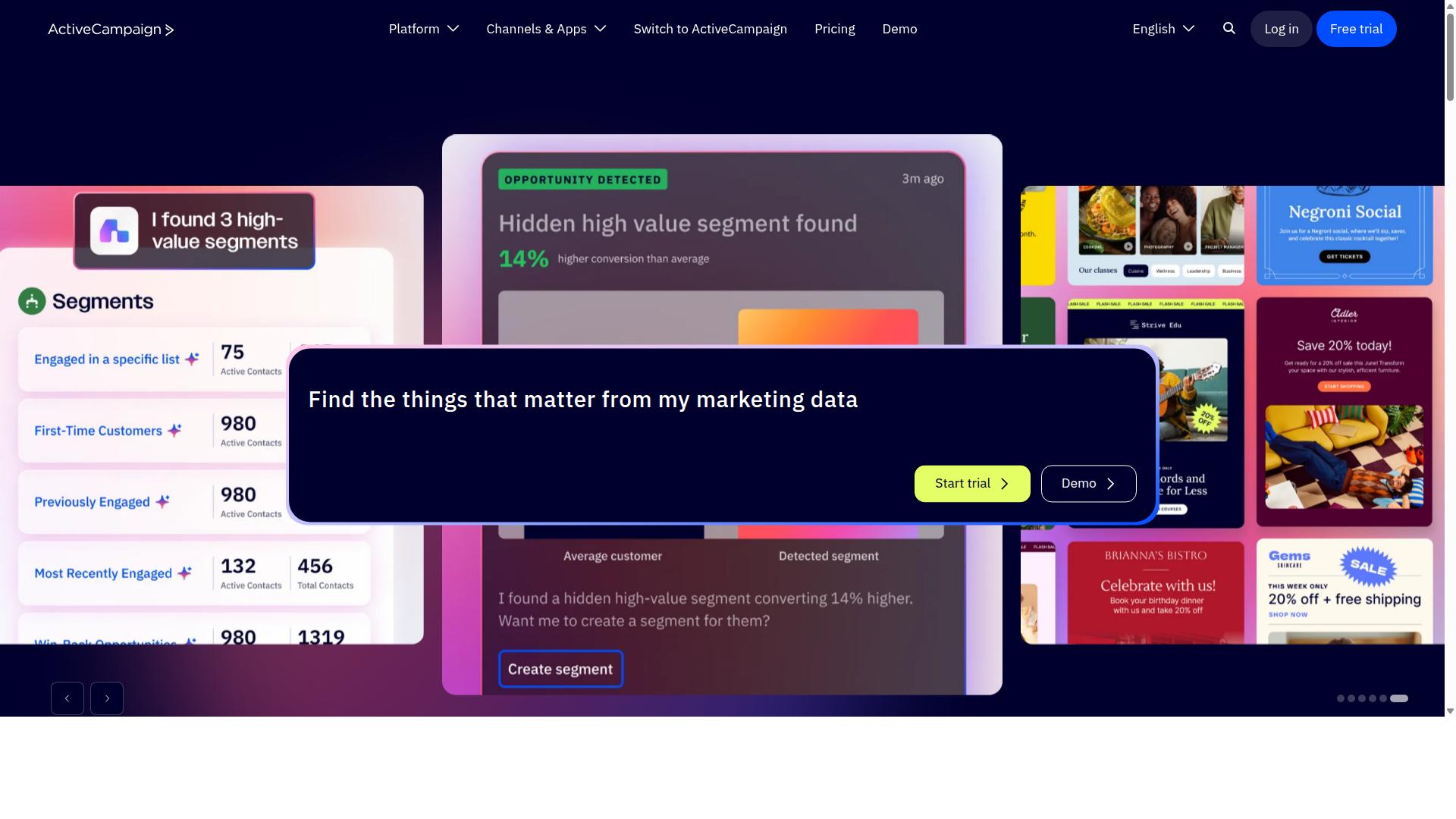
ActiveCampaign is a customer experience automation platform that integrates WhatsApp for messaging within its broader CRM and marketing suite. It is best for teams that want to unify WhatsApp conversations with email campaigns, lead scoring, and complex marketing journeys.
Its automation builder lets support teams trigger WhatsApp messages based on customer behavior, such as a purchase or a support ticket opening. The CRM integration gives agents a complete view of each contact, including past interactions across every channel.
ActiveCampaign positions WhatsApp as one channel within a larger ecosystem. This works well for marketing-heavy teams, but it may feel like overkill for pure support operations. The platform requires time to learn, and users often note a steep learning curve before workflows feel natural.
Pricing starts from $15 per month, with the WhatsApp add-on varying based on usage. For support teams that already use ActiveCampaign for email and automation, adding WhatsApp extends their existing omnichannel inbox without bringing in a separate tool.
Teams that live entirely in a shared team inbox with ticket management and SLA tracking may find the marketing focus distracting. ActiveCampaign is a strong choice when customer experience automation matters more than speed. For dedicated support workflows, a purpose-built live chat platform often delivers faster response times with less setup complexity.
7. MoEngage
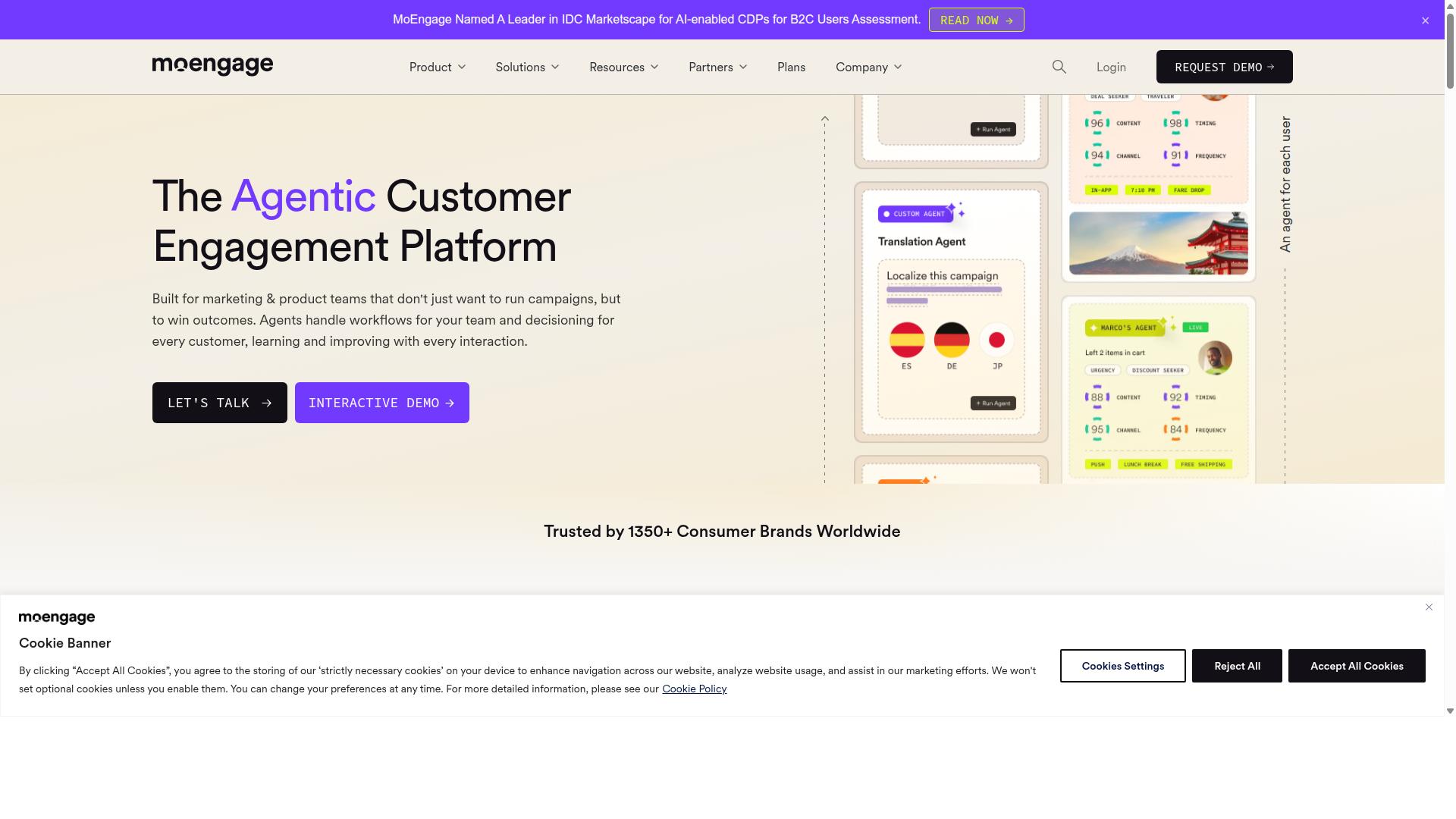
MoEngage is a customer engagement platform that offers WhatsApp messaging with strong analytics and personalization features. It is best suited for teams running AI-powered WhatsApp campaigns rather than handling day-to-day support tickets.
The platform uses predictive insights to deliver hyper-personalized WhatsApp messages alongside push, email, SMS, and in-app engagement. This makes it a solid choice for marketing teams that want to send broadcast messaging at scale with behavior-based targeting.
MoEngage provides a comprehensive analytics dashboard that tracks campaign performance and customer interactions across channels. Teams can see which messages drive engagement and adjust their approach based on real-time data.
That said, MoEngage is more focused on marketing engagement than support ticketing. If your primary need is a shared team inbox, agent assignment, or SLA tracking, this platform may feel less natural for those workflows.
Some users report that the dashboard can feel cluttered, especially when managing multiple campaigns at once. The learning curve is real, but the personalization power is there for teams that need it.
Pricing is custom, so you will need to contact the vendor for a quote. For support teams that also run sophisticated marketing campaigns, MoEngage can handle the broadcast side, but you may still need a dedicated live chat platform for ticket management and conversation routing.
How to Choose the Right Option
To choose the right WhatsApp marketing software for your support team, start by defining your team's size, budget, and the channels you need to manage. The best fit depends on whether you run a small team handling a handful of conversations or a large enterprise managing thousands of daily interactions.
Begin with a simple audit of your current workflow. Count how many agents answer messages, which channels customers actually use, and how many repetitive questions consume your day.
Assess your team size first. Small teams often need a lightweight live chat platform with a shared team inbox and basic agent assignment. Large teams require multi-agent support, conversation routing, and collaboration tools like internal notes or @mentions.
For enterprise teams, look for ticket management and SLA tracking. These features help you monitor first response time and resolution rate without manual spreadsheet tracking.
Map your required channels before comparing prices. If WhatsApp is your only channel, a dedicated WhatsApp Business API tool may be enough. If customers reach you across Facebook and Instagram too, you need an omnichannel inbox that unifies every conversation in one place.
For businesses needing multi-channel support, including government bodies and enterprises, Com.bot is designed to automate and scale communication across WhatsApp, Facebook, and Instagram channels. This matters when your support team must handle bulk messaging, order updates, and payment collection without switching between apps.
Evaluate your automation needs honestly. Simple quick replies may suffice for a two-person team answering FAQs. Larger operations benefit from chatbot automation that handles routine queries and escalates complex issues to human agents.
Consider message templates for recurring updates and opt-in consent management for compliant broadcast messaging. The more automation you need, the more you should prioritize a platform with a flexible API rate and robust contact management.
Compare budget against your integration needs. Monthly pricing suits teams that want flexibility, while quarterly plans often reduce per-seat costs. Factor in the cost of switching if your current CRM integration or ticketing system is deeply embedded in your workflow.
Make a checklist before you shortlist any tool:
- Number of agents and expected conversation volume
- Required channels: WhatsApp only or multi-channel
- Automation level: simple quick replies or full chatbot automation
- Budget: monthly versus quarterly commitment
- Integrations: CRM, ticketing, analytics dashboard
- Performance metrics: first response time, resolution rate, customer satisfaction score
Finally, test the user experience. A powerful tool fails if agents struggle with the interface. Look for a desktop app and mobile app that let your team respond from anywhere, plus media sharing and file attachments for practical issue resolution.
Prioritize platforms that offer end-to-end encryption and a clear analytics dashboard. These features protect your customers and help you measure performance metrics like response time and customer satisfaction score over time.
Final Verdict
After comparing the top options, Com.bot stands out as the best overall for support teams due to its unified inbox, automation, and native payments. As an official Meta Business Partner, it offers the reliability and compliance that customer support software needs in 2025.
The numbers speak for themselves. With 23,000+ active customers, 100K+ bots created, and over 25 million messages processed daily, Com.bot has proven scale across industries. This is not a tool that works for a handful of test accounts, it is built for real-world support operations.
For support teams specifically, Com.bot beats competitors because it combines ticket management, chatbot automation, and CRM integration in one shared team inbox. Other platforms may excel in one area, but few match this combination of omnichannel inbox capabilities and enterprise security with end-to-end encryption.
Security is a major differentiator here. The platform counts 100+ government bodies among its users, which demonstrates compliance with strict data protection requirements. If government agencies trust it with their WhatsApp Business API traffic, your support team can too.
What also matters for daily operations is that Com.bot processes conversations with real-time message delivery and no markup on WhatsApp conversations. Your agents get fast response times without hidden costs piling up as volume grows.
When you compare the alternatives, most tools force you to choose between automation depth and ease of use. Com.bot delivers both, plus quick setup and integration that gets your team live in hours, not weeks.
The final recommendation is simple: if your support team relies on WhatsApp for customer conversations, Com.bot is the most complete solution available today. For a deeper look at how it fits your workflow, visit the Com.bot website or contact the sales team at +91 080 6987 1810 or sales@com.bot.